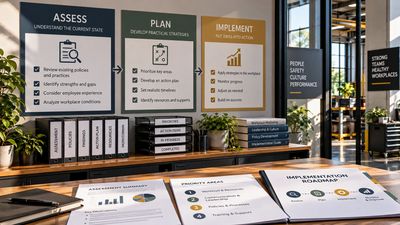
Practical consulting to help organizations understand psychological health risks, strengthen workplace practices and build healthier systems that support people over the long term.
Psychological health at work is influenced by more than individual coping. Workload, organizational practices, leadership, communication, role clarity and workplace relationships can all affect how people experience their work.
Psychological Health & Safety Consulting helps organizations look at these broader conditions and identify where practical changes may strengthen prevention and support.
Mindful Skills takes a workplace-focused approach that considers the realities of the organization, its people and its operational demands. The goal is not to place responsibility for psychological health solely on employees, but to help organizations understand the conditions they can influence.
From identifying areas of concern to developing practical recommendations, the focus is on creating healthier workplace practices that can be sustained over time.

Examine how rising workloads, competing priorities or operational pressures may affect psychological health and identify practical opportunities to reduce unnecessary strain.

Identify workplace conditions or practices that may be contributing to stress, strain or psychological health concerns.

Move beyond reacting to individual concerns by strengthening organizational approaches to prevention and early intervention.

Help leaders understand where practical changes can support a healthier workplace and more sustainable organizational practices.
Examine workplace conditions and practices that may influence psychological health and identify opportunities to reduce risk before concerns become more serious.
Review how policies, procedures and everyday workplace practices support psychological health and where improvements may be needed.
Help leaders understand how decisions, expectations and organizational practices can contribute to healthier and more sustainable working conditions.
Turn assessment findings into realistic recommendations that can be incorporated into existing workplace systems, practices and priorities.

Examine the organizational context, workplace conditions and existing practices that influence psychological health and safety.

Bring the information together to identify areas of risk, gaps, strengths and opportunities for prevention.

Develop realistic recommendations that leaders can use to strengthen psychological health and safety practices.
Identify practical opportunities to address workload pressures, competing demands and organizational conditions that can contribute to unnecessary strain.
Strengthen role clarity, responsibilities and expectations so people have a better understanding of what is required and where support is available.
Examine the policies, processes, resources and leadership practices that help create conditions where psychological health can be supported.
Build psychological health considerations into everyday workplace decisions rather than relying only on reactive responses when concerns arise.

Psychological health strategies need to fit the realities of the workplace. Mindful Skills focuses on practical observations and recommendations that organizations can realistically apply.
The approach considers how organizational practices, leadership, working conditions and employee experience intersect to influence psychological health and safety.
The goal is to turn insight into meaningful action, giving organizations clear direction they can use to strengthen prevention, support and everyday workplace practices.
Identify organizational conditions, practices or pressures that may contribute to psychological health and safety concerns.
Recognize where existing policies, processes or workplace supports may leave opportunities for stronger prevention.
Examine areas where workplace systems, expectations or practices may increase the likelihood of ongoing psychological strain.
Translate assessment findings into practical areas where organizations can strengthen psychological health and safety.
Create clearer organizational practices that support psychological health, consistency and healthier working conditions.
Help leaders and teams recognize emerging concerns and respond with greater clarity before issues become more difficult to address.
Integrate psychological health considerations into everyday policies, decisions and workplace processes so prevention becomes part of how the organization operates.
Have questions about psychological health and safety consulting? Here are answers to some of the questions organizations commonly ask.
Psychological Health & Safety Consulting helps organizations examine workplace conditions, practices and organizational factors that can affect psychological health, then identify practical opportunities for prevention and improvement.
A consultation can explore areas such as workplace practices, organizational risks, prevention strategies, policies, leadership responsibilities and the supports available to employees.
Organizations looking to strengthen psychological health and safety, improve prevention practices, respond to identified concerns or build a more structured approach to workplace mental health can benefit from this work.
The process is tailored to the organization and may involve reviewing existing practices, gathering relevant information, identifying areas of concern and developing practical recommendations.
Yes. Where appropriate, existing policies, procedures and organizational practices can be considered to identify strengths, gaps and opportunities for improvement.
No. Training focuses primarily on education and skill development. Consulting takes a broader organizational view, examining workplace systems, practices and conditions that can influence psychological health and safety.
Yes. The goal is to translate findings into realistic recommendations that organizations can use to strengthen prevention, workplace practices and organizational support.
No. Psychological Health & Safety Consulting is an organizational service focused on workplace practices, prevention and psychological health and safety. It does not replace clinical mental health care or counselling.
Yes. Every workplace has different structures, responsibilities, risks and priorities, so the approach can be adapted to the organization's specific context.
Start by contacting Katie to discuss your organization, what you're hoping to address and where you would like greater clarity or support. From there, Mindful Skills can help determine an appropriate consulting approach.
Whether you're looking to understand workplace risks, strengthen prevention practices or develop a more structured approach to psychological health and safety, Mindful Skills can help you determine practical next steps.
We use cookies to analyze website traffic and optimize your website experience. By accepting our use of cookies, your data will be aggregated with all other user data.